
Gum Disease Treatment – Columbus, NJ
Ensuring a Healthy Foundation for Your Smile
Just like it’s important to have healthy teeth, it’s important to have healthy gums. That’s why we encourage our patients to commit to a solid oral hygiene regimen at home, including flossing at least once a day. If there comes a time when you suspect that something is wrong, like your gums feel tender or bleed easily, let Dr. Fraser and our Columbus Dental Arts team help! You can also read on to learn more about gum disease treatment, including the different types that we offer.

Why Choose Columbus Dental Arts for Gum Disease Treatment?
- Caring, Gentle Dental Team
- Conservative Approach to Dental Treatment
- Gum Screening at Every Checkup
What is Gum Disease?

In short, if too much plaque and tartar accumulate on your gums, you could develop periodontal disease. Also known as gum disease, this oral health problem affects roughly 50% of American adults. Although the symptoms are relatively mild in the beginning, like slight inflammation, the infection can eventually lead to tooth loss if left untreated. That’s why it’s so important to keep an eye out for common symptoms and to get in touch with our Columbus dental team if any surface.
Symptoms of Gum Disease

In the early stages of gum disease, you may notice bleeding when you floss, swollen or tender gums, or chronic bad breath. However, as the infection progresses, the symptoms become more severe, like gum recession, a pimple-like bump on the surface, and even tooth loss. That’s why it’s so important for us to provide gum disease treatment early on.
How Do We Treat Gum Disease?

We offer two types of gum disease treatment in Columbus. During your visit, we can discuss both options in-depth, including which one we recommend for you. In the meantime, you can read on to learn a little more about them!
Scaling & Root Planing
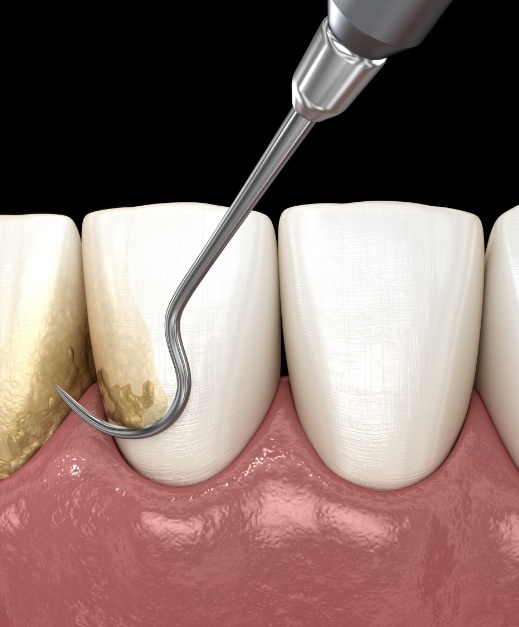
Also known as a dental deep cleaning, the scaling and root planing procedure is like a regular cleaning except that it focuses on the parts of the teeth below the gumline. Scaling involves the removal of plaque and tartar deposits – the underlying cause of gum disease – from around the teeth’s roots. Then, we carefully smooth out the rough edges of the roots, which reduces the risk of reinfection by making it more difficult for bacteria to attach to them in the future.
Arestin® Antibiotic Therapy
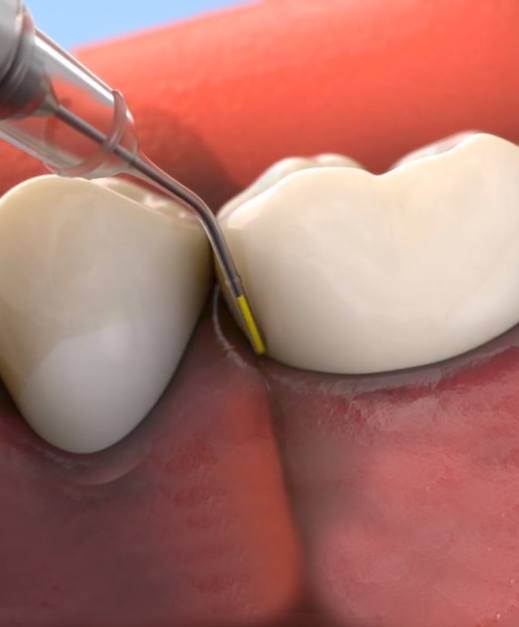
The tiny spaces between your gums and teeth, called periodontal pockets, are common spots where disease-causing bacteria tend to hide and multiply. It’s difficult to clean these areas with regular dental instruments, but the good news is that we can target them directly with antibiotic therapy. We apply a topical antibiotic called Arestin® to these pockets. Over the next several days, the medicine spreads throughout the gum tissue, eliminating infection from hard-to-reach areas.
Gum Disease Treatment FAQs
How common is gum disease?
Unfortunately, gum disease is very common here in the United States. In fact, the Centers for Disease Control (CDC) believes a staggering 40 percent of all adults over the age of 30 have some form of the condition, and that number jumps to 60 percent over the age of 65!
Gum disease is more common in men than women, with an estimated half of all men expect to develop it versus only about 30 percent of women.
Things that can increase your risk of developing periodontal infection include poor oral hygiene, smoking and vaping, and even medical conditions like diabetes that cause problems managing sugar and oral bacteria levels.
Is mouthwash good for gum disease?
Although mouthwash is an excellent add-on to your complete oral hygiene routine, it should never be used as a complete substitute for regular brushing and flossing. It is also recommended that if you do use mouth rinses, it is better to choose products that don’t contain alcohol. While these leave you with clean, crisp breath, they can dry out your gum tissue and may even make gum disease worse instead of better!
If you’re interested in adding mouthwash to your daily oral hygiene routine, be sure to bring it up with your dentist first. This way, he or she can recommend an appropriate product that will truly benefit your healthy smile and complement your gum disease treatment in Columbus.
Does gum disease ever go away?
While advanced stages of gum disease won’t go away on their own, if you have the first stage known as gingivitis it is sometimes possible to reverse it. This can usually be done by simply improving your brushing and flossing routine and avoiding bad oral habits like smoking and vaping.
Unfortunately, however, should your condition advance to a later stage such as periodontitis, this can be much harder to eradicate and could eventually lead to tissue and bone loss. If this occurs, you’ll need more advanced gum disease treatment in Columbus such as scaling and root planing and/or Arestin® antibiotic therapy.
Following gum disease treatment, it is important that you take excellent care of your teeth and gums, as the condition can easily return.
What’s the best way to prevent gum disease?
The best way to protect your teeth and gums from the ravages of gum disease is to never get it in the first place. Thankfully, this is easier than you might think!
First, be sure to always practice excellent oral hygiene. This includes brushing your teeth twice a day and flossing daily. Also, don’t forget to visit your dentist every six months for your regular checkups and cleanings.
If you take good care of your smile but still feel like you could be doing more, you can also add a mouthwash to your routine. Talk to your dentist about her or his recommendations for the best products for your individual smile.
People who smoke and vape are at a much higher risk of developing gum disease, so if you fall into that category, be sure to quit as soon as possible. Also, do your best to eat a healthy diet and keep medical conditions like diabetes under control, as these can also negatively impact your oral health.